A Framework for Convective-Scale Observing System Simulation Experiments Using Ensembles
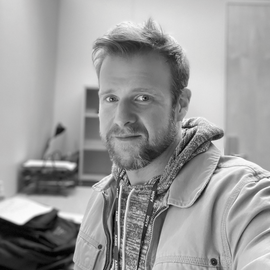
Dr. Jeremy A. Gibbs
Research Meteorologist
My name is Jeremy Gibbs. I am a Research Meteorologist at the NOAA National Severe Storms Laboratory. My research includes computational and theoretical studies of atmospheric boundary-layer flows, turbulence modeling, land-surface modeling, parameterization of boundary-layer and surface-layer interactions, and multi-scale numerical weather prediction. I am currently working on projects to improve atmospheric models in the areas of scale-aware boundary-layer physics, heterogeneous boundary layers, and other storm-scale phenomena.
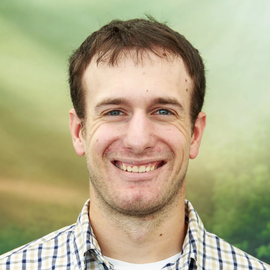
Dr. Joshua G. Gebauer
Research Scientist
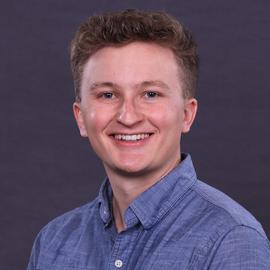
Matthew B. Ammon
Ph.D. Student
I am an graduate meteorology student at the University of Oklahoma. I have worked with BLISS since March 2022 using CLAMPS lidar data collected from the VORTEX-SE and PERiLS field research campaigns to analyze the behavior of the atmospheric boundary layer in the southeast United States during severe weather. I have explored various case studies where I analyze how lidar data can be used to quantify boundary layer processes related to convective initiation and tornado-genesis. I have also looked into differences between lidar observations and forecast model guidance to gain insight into why event outcomes did not unfold as expected. Currently, I am researching how terrain impacts boundary layer processes related to the initiation and evolution of convection along the eastern boundary of the Mississippi Delta region.