Relating the Effects of Heterogeneous Terrain on Boundary Layer Flow to the Evolution of Preconvection Environments Using Remote Profiler Datasets from PERiLS
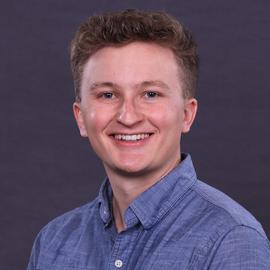
Matthew B. Ammon
Ph.D. Student
I am an graduate meteorology student at the University of Oklahoma. I have worked with BLISS since March 2022 using CLAMPS lidar data collected from the VORTEX-SE and PERiLS field research campaigns to analyze the behavior of the atmospheric boundary layer in the southeast United States during severe weather. I have explored various case studies where I analyze how lidar data can be used to quantify boundary layer processes related to convective initiation and tornado-genesis. I have also looked into differences between lidar observations and forecast model guidance to gain insight into why event outcomes did not unfold as expected. Currently, I am researching how terrain impacts boundary layer processes related to the initiation and evolution of convection along the eastern boundary of the Mississippi Delta region.

Dr. Tyler M. Bell
Assistant Professor
Dr. Tyler Bell is an Assistant Professor in the School of Meteorology and School of Aviation at the University of Oklahoma. Dr. Bell earned his B.S. (2016), M.S. (2018), and Ph.D. (2021) in Meteorology from the University of Oklahoma. Prior to joining the faculty in Fall 2025, he served as a Research Scientist at the Cooperative Institute for High-Impact Weather Research and Operations from 2020 to 2025.
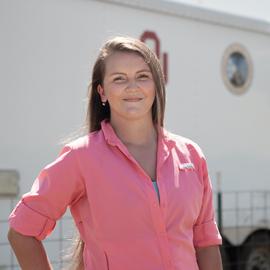
Dr. Elizabeth N. Smith
Research Meteorologist
Elizabeth joined NSSL as a research meteorologist in January 2020, where she focuses on boundary-layer processes relevant to near- and pre-storm environments and convection initiation.
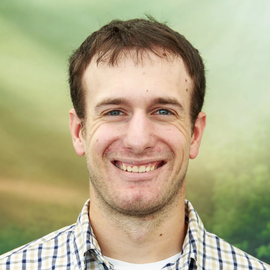
Dr. Joshua G. Gebauer
Research Scientist