The "Twisters" Effect: The Real Science of Storm Chasing
With the massive success of the movie Twisters, there has been a huge surge in public interest surrounding severe weather research. As the real-life scientists observing tornadoes on the ground and in the sky, our team has been featured in several national outlets discussing the real science behind the silver screen.
Fast Company: The Real-Life Storm Chasers Who Inspired Twisters’ Crazy Trucks
Fast Company dove into the rugged, highly customized vehicles we use during our field deployments. The article reveals how our actual mobile radars and UAS deployment trucks inspired the incredible, tech-heavy storm-chasing vehicles seen in the movie.
Scientific American: Between Twister and Twisters, Tornado Science Has Improved a Lot
How far has our field come in three decades? Scientific American explores the massive leaps in tornado science, radar technology, and drone deployment that have occurred since the original 1996 movie debuted, proving that the reality of our research is often more fascinating than fiction.
Read the Scientific American article
NOAA Weather Partners: Are Drones/UAS Actually Used to Study Tornadoes?
You may have seen the concept in Twisters, but is it real? This NOAA video breaks down how our team at NSSL actually uses uncrewed aerial systems (UAS) to observe and measure the atmosphere near tornadoes, proving that deploying drones into severe weather environments isn’t just movie magic.
CNN: The ‘Twister’ Generation of Storm Chasers
CNN highlighted how the original 1996 movie inspired an entire generation of atmospheric scientists—including many on our own team! The piece explores the legacy of the film and what real-world researchers hoped to see portrayed in the sequel.
NOAA Heritage: A Career Twist of Fate
NOAA published “A Career Twist of Fate”, an amazing look at how Hollywood has helped inspire a new generation of meteorologists. It’s a wonderful reflection on the intersection of pop culture and our very real, day-to-day severe weather research operations.
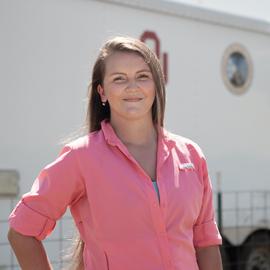
Dr. Elizabeth N. Smith
Research Meteorologist
Elizabeth joined NSSL as a research meteorologist in January 2020, where she focuses on boundary-layer processes relevant to near- and pre-storm environments and convection initiation.

Dr. Tyler M. Bell
Assistant Professor
Dr. Tyler Bell is an Assistant Professor in the School of Meteorology and School of Aviation at the University of Oklahoma. Dr. Bell earned his B.S. (2016), M.S. (2018), and Ph.D. (2021) in Meteorology from the University of Oklahoma. Prior to joining the faculty in Fall 2025, he served as a Research Scientist at the Cooperative Institute for High-Impact Weather Research and Operations from 2020 to 2025.
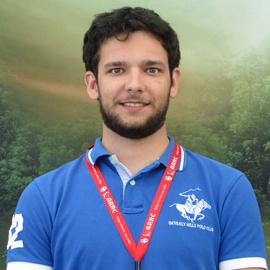
Dr. Antonio R. Segales
Research Engineer
My research centers around developing small unmanned aircraft systems for adaptive atmospheric sampling which involves CAD modeling, systems optimization, hardware and software integration, and control theory. I have led the design of the CopterSonde series of vehicles, which is used to perfrom controlled and targeted weather sampling at high temporal and spatial resolutions. I am also advising other projects in which sensor integration or new UAS are required.